
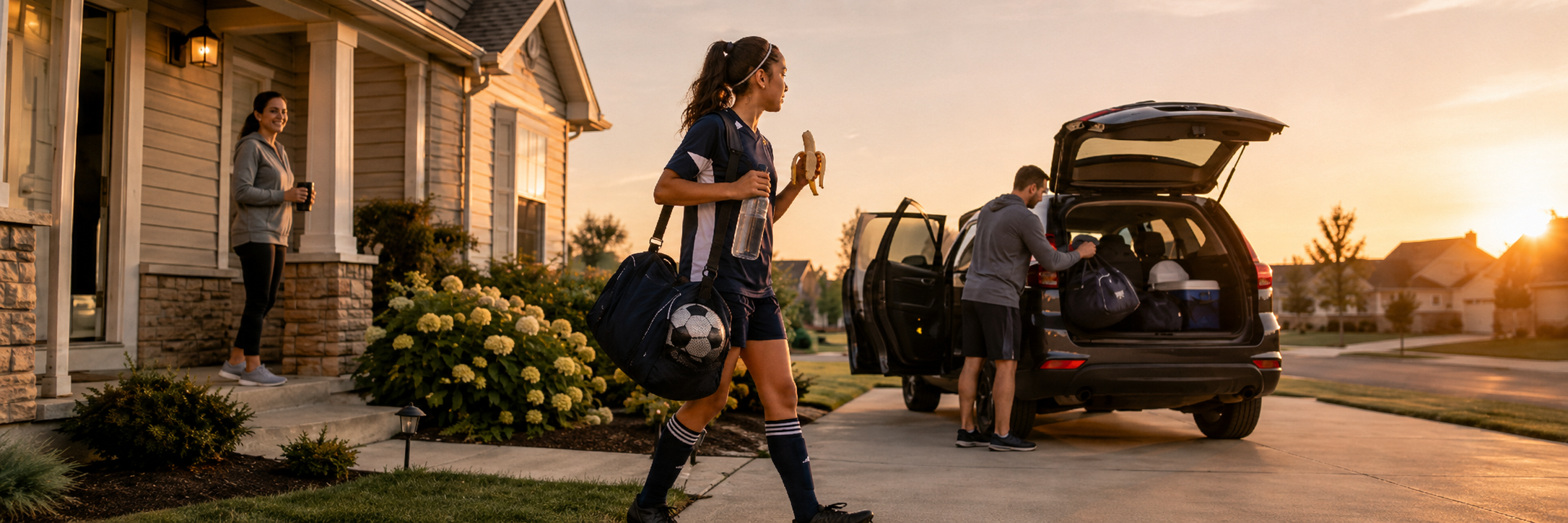
My Game Is at 8:00 AM and It’s a Two-Hour Drive. What Should I Eat?

Hello world
An 8:00 a.m. game is early.
An 8:00 a.m. game two hours from home is a different challenge altogether.
You may need to leave the house around 5:00 a.m., which means the normal advice to eat a full pre-game meal three or four hours before competition suddenly becomes a lot less convenient.
Your Preparation Starts the Night Before
When you have an early game, dinner the night before deserves a little extra attention.
That doesn't mean eating an enormous meal or trying to “carb load” until you're stuffed. It means eating a balanced, familiar dinner that gives your body carbohydrate for fuel, protein, fluids and enough total energy.
Build a solid, familiar dinner.
Think pasta with tomato sauce and chicken, rice with chicken or another lean protein and vegetables, a rice bowl with familiar toppings, or another meal you already know sits well.
The night before a game is generally not the best time for a giant greasy meal, unfamiliar restaurant food or anything you already know tends to bother your stomach.
Think of dinner as the first step in tomorrow morning's fueling plan.
SourceNutrition and Athletic Performance ↗
Don't Go to Bed Running on Empty
If dinner was early, you trained that evening, or you're hungry again before bed, a small bedtime snack can also make sense.
Something simple such as Greek yogurt with fruit, cereal with milk, milk and a banana, or toast with peanut butter can provide another opportunity to get carbohydrate and protein before the overnight fast.
You don't need to force yourself to eat if you're satisfied from dinner. The goal is simply to avoid waking up after a long overnight fast already feeling underfueled.
Game Morning: Eat Something
Let's say your game starts at 8:00 a.m. and the drive is approximately two hours.
You might wake up around 4:30–5:00 a.m.
That's early, but skipping breakfast entirely isn't the best plan simply because you're tired.
If you tolerate food well in the morning, have a carbohydrate-focused breakfast before getting in the car. Keep it familiar and relatively easy to digest.
Make breakfast smaller rather than automatically skipping it. A banana with toast and jam, applesauce with a granola bar, a small bowl of cereal, or a fruit smoothie may be easier to tolerate.
Sports-nutrition guidance emphasizes matching food and carbohydrate timing to the demands and timing of exercise. On an early game morning, the practical goal is to get useful fuel in without eating so much that you arrive feeling overly full.
SourceISSN — Nutrient Timing ↗
Use the Drive to Your Advantage
A two-hour drive doesn't have to be dead time.
It gives you an opportunity to gradually continue fueling.
Instead of eating one enormous breakfast at 5:00 a.m., you might eat a reasonable breakfast before leaving and then have a small carbohydrate-rich top-off snack during the drive, roughly one to two hours before the game.
Oatmeal + banana, cereal + milk, bagel + fruit, or another familiar breakfast.
Bring your water bottle and a simple carbohydrate-rich snack.
Banana, applesauce, pretzels, crackers, toast with jam or a small granola bar.
Avoid suddenly eating a huge meal or drinking a huge amount immediately before play.
This approach follows the same basic idea covered in our pre-game nutrition guide : get useful fuel in ahead of competition, then make food choices simpler as game time gets closer.
Hydrate During the Drive, Too
Don't forget that you've also gone all night without drinking.
Have some fluid with breakfast and bring a water bottle for the drive. Sip periodically rather than trying to catch up by drinking a huge amount when you arrive.
Starting hydration several hours before activity gives your body time to absorb fluid and allows excess fluid to be cleared before competition.
Water will work well for many athletes. Depending on game duration, intensity, heat and individual sweat losses, a beverage containing carbohydrate and electrolytes may also be useful.
SourceAmerican College of Sports Medicine — Hydration ↗
What If I Absolutely Can't Eat at 5:00 a.m.?
Some athletes wake up hungry.
Others look at breakfast at 4:45 a.m. and want nothing to do with it.
The answer isn't to force down a giant meal that makes you feel sick.
This is when the night before becomes especially valuable.
Eat a solid dinner, consider a bedtime snack if appropriate, then have whatever small morning meal you comfortably tolerate. A smoothie or another liquid option may work particularly well for athletes who struggle with solid food early in the morning.
Then bring a familiar snack in the car and eat a little more as your appetite wakes up.
Pack Your Game-Morning Food the Night Before
One of the easiest mistakes with an early road game is simply running out of time.
At 4:45 in the morning, you don't want to be searching the pantry for something to eat while someone is yelling that it's time to leave.
Set everything out the night before.
That way, nutrition becomes part of your game preparation instead of something you try to figure out half asleep.
The Best Plan Is the One You've Practiced
Don't wait for a tournament, playoff game or championship to discover whether oatmeal at 5:00 a.m. agrees with your stomach.
Try your early-game routine before practices or less important games.
Maybe you perform best with a real breakfast before leaving.
Maybe you prefer a small smoothie at home and a banana halfway through the drive.
Maybe cereal and milk works every single time.
An Early Game Doesn't Mean an Empty Stomach
An 8:00 a.m. game with a two-hour drive isn't ideal for normal meal timing, but it doesn't have to derail your nutrition.
Start with a good dinner the night before. Get a good night's sleep. Eat something when you wake up. Bring an easy-to-digest carbohydrate snack for the drive. Sip fluids along the way.
And when you arrive, you can spend your final hour thinking about the game—not wondering whether you ate enough to get through it.
Your game may start at 8:00 a.m., but your preparation starts the night before.